
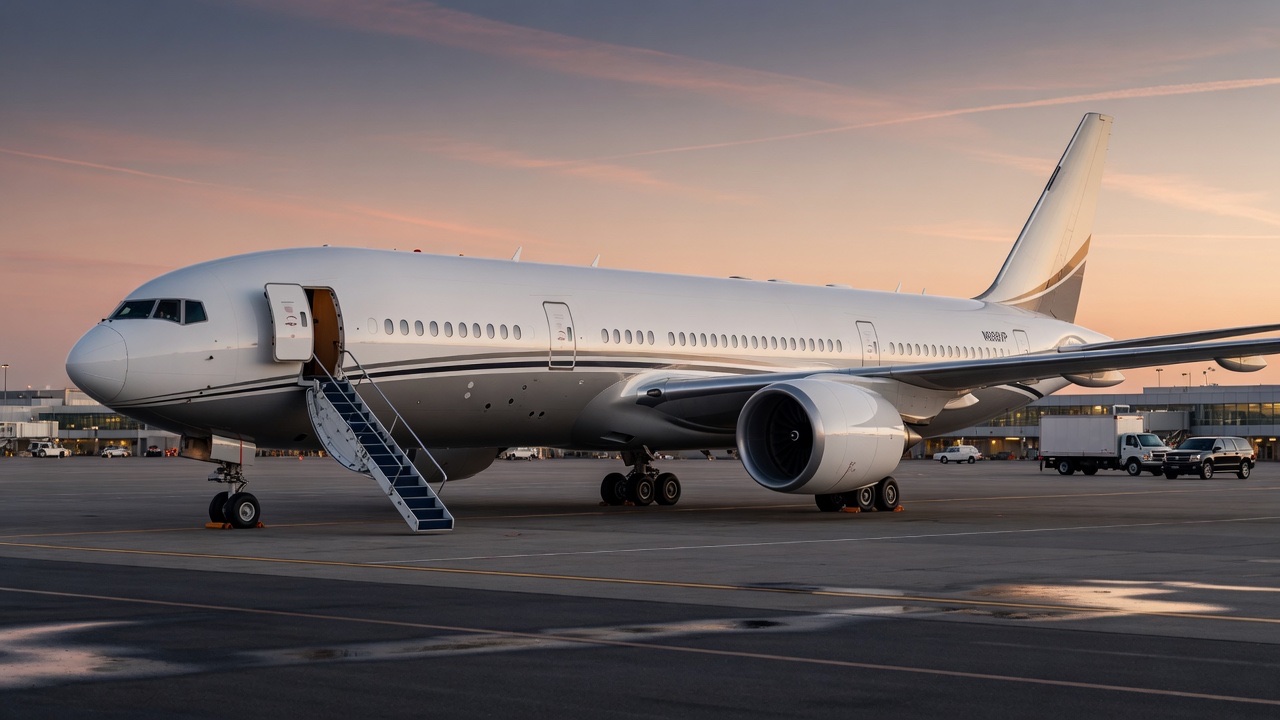
Gulfstream G650ER
Up to roughly 7,500 nm at long-range cruise and Mach 0.85 high speed. Wide, quiet cabin with up to four living areas and a popular choice for transpacific and transpolar missions.

Aircraft
Cross oceans nonstop in the largest, most capable business jets flying today. Private JetOne arranges ultra-long-range charters worldwide with no membership fees and 24/7 support.
Overview
Ultra-long-range jets are the aircraft that connect continents without a fuel stop. They combine the longest legs in private aviation with the largest purpose-built business cabins, so a board, a family, or a delegation can fly New York to the Middle East or Asia in a single hop and arrive rested.
Range figures are nominal maximums under ideal payload and winds; real-world nonstop capability on the longest sectors depends on passenger count, baggage, runway length, and weather. Our team confirms an honest nonstop plan for your exact itinerary before you commit.
Aircraft
A short list of the aircraft most often chartered in this class. Each delivers intercontinental range; cabin layout, cruise speed, and baggage volume vary by type and tail.
Up to roughly 7,500 nm at long-range cruise and Mach 0.85 high speed. Wide, quiet cabin with up to four living areas and a popular choice for transpacific and transpolar missions.
Approximately 7,700 nm of range with four true cabin zones, a full kitchen, and a dedicated crew rest. One of the longest cabins in business aviation.
Around 6,450 nm from a tri-jet built for efficiency and steep, short-runway access to demanding airports such as London City-style approaches.
Roughly 7,500 nm with the largest Gulfstream cabin to date, five living zones available, and large panoramic windows for ultra-long flights.
Gallery
Exterior, cabin, seating, and detail views. Luxury charter photography for this aircraft class.
Routes
These aircraft exist to fly nonstop between distant business and leisure capitals, removing the fuel stops, terrain detours, and time loss that smaller jets accept on the same routes.
KTEB or KJFK to EGGW or EGGD, comfortably nonstop with margin to spare even against winter headwinds.
A transpolar or transpacific leg to RJTT or RJAA that an ultra-long-range jet covers in a single hop.
KLAX to YSSY across the Pacific, one of the signature missions for the G650ER and Global 7500.
VHHH to KTEB nonstop, with a full stateroom so passengers can sleep through the long sector.
KTEB to OMDB, a classic intercontinental business pairing for delegations and family travel.
EGGW to WSSS, a long Asia-bound leg where berthing and cabin space make the difference.
Cabin & cost
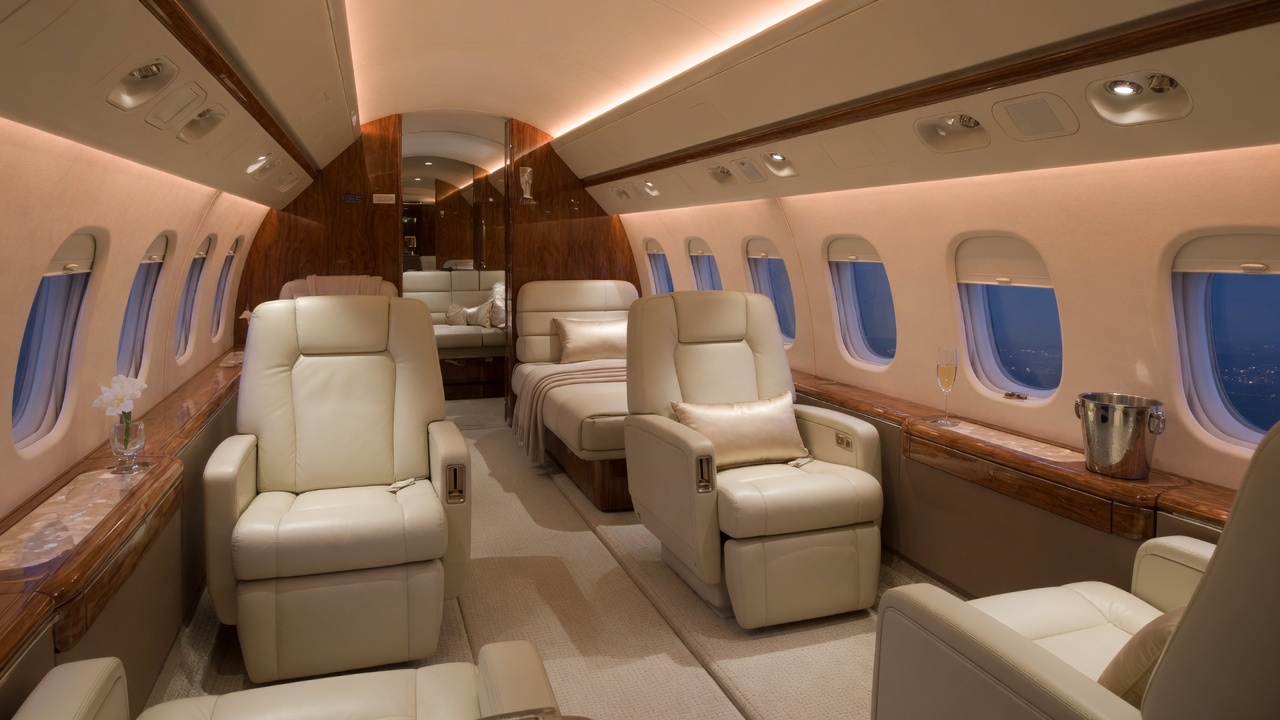
An ultra-long-range cabin is designed to be lived in for ten-plus hours. Expect distinct zones for working, dining, and sleeping, a forward galley, an aft private stateroom, and en-suite lavatory space on the largest models.
Pricing for this class sits at the premium end of charter and is quoted per trip, never as a fixed rate. The main cost drivers are the occupied flight hours, fuel, international handling and permits, overnight crew expenses, repositioning to and from your departure airport, peak-season demand, and applicable taxes and fees. Tell us the city pair, dates, and headcount and we will return aircraft options with transparent all-in pricing and no membership fees.
FAQ
An ultra-long-range jet is the top tier of business aircraft, built to fly roughly 6,000 to 8,000-plus nautical miles nonstop at near-Mach cruise speeds. The class includes aircraft like the Gulfstream G650ER, Bombardier Global 7500, Dassault Falcon 8X, and Gulfstream G700, each pairing intercontinental range with the most spacious purpose-built business jet cabins available.
Most ultra-long-range jets seat 12 to 19 passengers in their charter configuration, with several distinct living zones plus a private aft stateroom and a dedicated crew rest area on the longest-cabin models. Because these cabins are designed for sleeping on multi-leg missions, the comfortable berthing count is typically lower than the maximum certified seating.
These aircraft are built for nonstop intercontinental city pairs such as New York (KTEB) to London (EGGW), New York to Tokyo (RJTT), Los Angeles (KLAX) to Sydney (YSSY), and Hong Kong (VHHH) to New York. They eliminate the fuel stops that smaller jets need and can hold a steady high cruise altitude over oceans and remote terrain.
Ultra-long-range jets sit at the premium end of charter pricing, billed mainly by occupied flight hour plus fuel, international handling, overnight crew, repositioning, and applicable taxes and fees. Final cost depends on the specific aircraft, route distance, trip length, and seasonal demand, so Private JetOne quotes each itinerary individually rather than a fixed rate, with no membership fees.
They can fly the vast majority of intercontinental city pairs nonstop, but the longest sectors near the aircraft's maximum range can be affected by headwinds, payload, runway length, and hot or high-altitude departure airports. Our team confirms a realistic nonstop plan for your exact route, passenger count, and baggage before you confirm the trip.
Explore
The benchmark ultra-long-range jet for transoceanic missions.
Step up to a private airliner for the largest groups and longest stays.
An efficient choice for shorter regional hops and quick trips.
Short-runway access and value for regional travel.
A popular midsize cabin for transcontinental US legs.
Best-selling light jet with strong range and a refined cabin.
Browse the full Private JetOne fleet hub by category.
See every cabin class we charter worldwide.


