


Pilatus PC-12
A single-engine cabin-class favorite seating up to 8, prized for its versatility, large cargo door, and ability to reach short and remote strips that jets cannot. A go-to for regional executive travel.

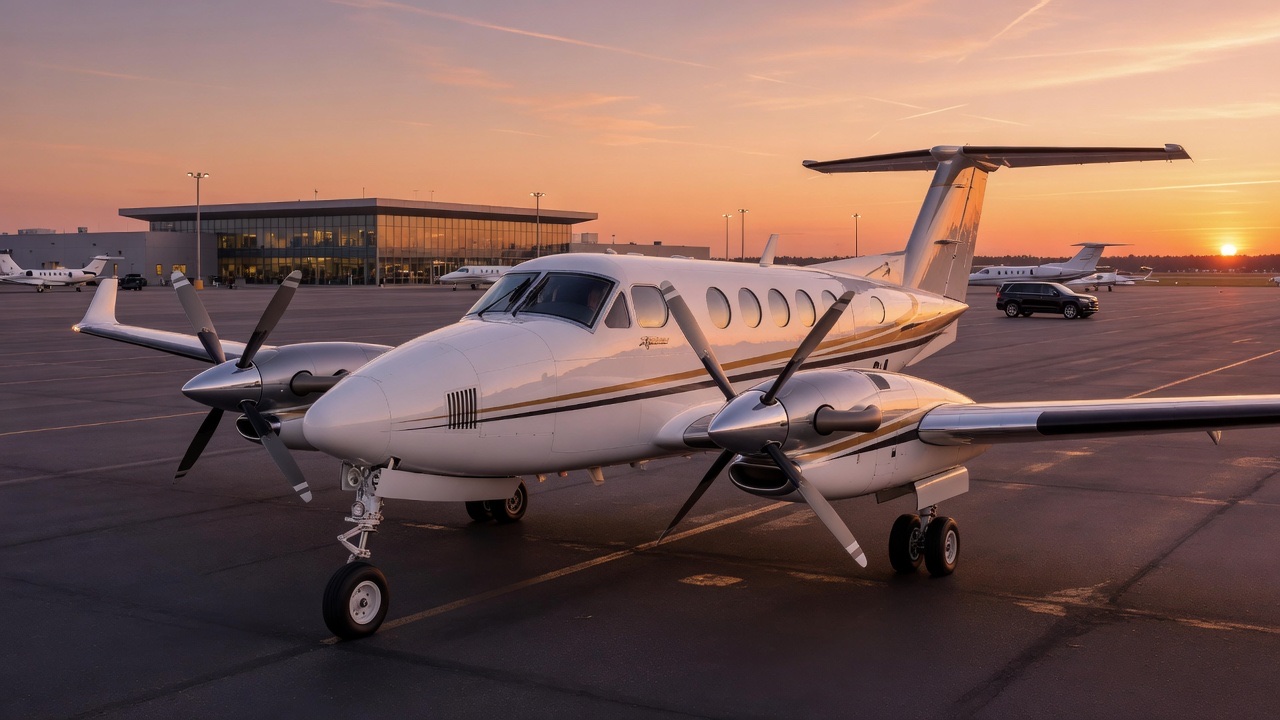
Aircraft
The most economical way to fly private on short regional routes - with short-field access that puts you closer to where you actually need to be.
Overview
Turboprops sit between piston aircraft and light jets. They pair a pressurized, stand-up-or-near executive cabin with turbine reliability and exceptional short-field performance - the smart choice for regional trips of one to three hours.
Powered by turbine engines driving propellers, modern charter turboprops cruise comfortably at altitudes that clear most weather while burning far less fuel than a jet on the same leg. That efficiency, combined with the ability to use thousands of smaller airfields, is exactly why turboprops remain the workhorse of regional private aviation. For a Manhattan executive heading to a quiet New England town, a turboprop can often land at a small county airport minutes from the destination instead of a distant jet-capable hub.
Cabin & range
A cabin-class turboprop offers a private, quiet ride for small groups, generous luggage capacity, and nonstop range that covers the bulk of regional charter demand.
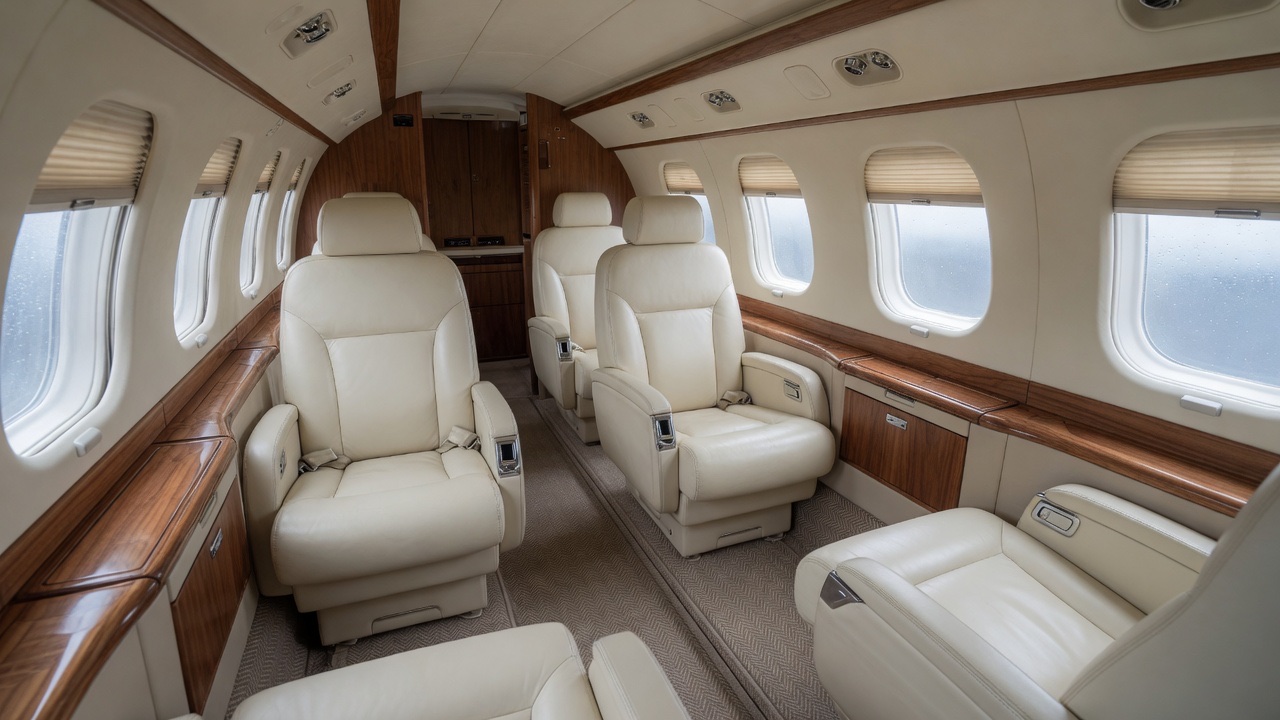
Gallery
Exterior, cabin, seating, and detail views. Luxury charter photography for this aircraft class.
Representative models
These proven, widely available aircraft anchor the turboprop class. Final tail selection always depends on your route, group size, and timing.
A single-engine cabin-class favorite seating up to 8, prized for its versatility, large cargo door, and ability to reach short and remote strips that jets cannot. A go-to for regional executive travel.
A twin-engine cabin-class turboprop seating 8 to 9 with a roomy, quiet interior and strong baggage capacity - a dependable choice for regional business trips and small groups.
A capable twin seating up to 8, blending efficient operating costs with excellent short-field and high-altitude airport performance for shorter regional legs.
A rugged single-engine utility turboprop suited to short hops, island runs, and unpaved or remote airfields where access matters more than speed.
Routes & cost
Turboprops shine on shorter regional routes and into airports larger jets cannot use. Pricing is built per trip - we never quote a fixed sticker rate.
A quick hop from Westchester (HPN) or Teterboro (TEB) to East Hampton (HTO) - short legs where a turboprop is fast door-to-door and cost-efficient.
Northeast and Mid-Atlantic city pairs under 600 nm - Boston (BOS), Washington (IAD), Philadelphia (PHL) - where turboprops beat the drive and skip the airline hassle.
Short or high-elevation runways and rural strips where short-field performance puts you minutes from the destination instead of a distant hub.
Flight time, aircraft type, repositioning legs, airport and handling fees, taxes, and crew costs - never a flat published price. Turboprops are often the most economical private option for short trips.
FAQ
Most charter turboprops seat between 6 and 9 passengers in a comfortable executive cabin. Single-engine models like the Pilatus PC-12 typically carry 6 to 8, while twin-engine cabin-class turboprops such as the King Air 350 seat 8 to 9. We confirm the exact seating layout for each tail before you book.
Charter turboprops generally fly nonstop ranges of roughly 1,000 to 1,800 nautical miles, which covers most regional and short cross-country trips of two to three hours. Range varies with passenger load, baggage, weather, and runway conditions, so we plan each leg against the specific aircraft and route.
A turboprop is ideal for shorter regional trips, missions into smaller or unpaved airfields, and routes where access to remote runways matters more than top speed. Light jets make more sense when you need faster cruise and longer nonstop legs. Our team compares both on price, runway access, and timing for your exact city pair.
Turboprop charter is priced per trip based on flight time, aircraft type, repositioning, airport and handling fees, taxes, and crew costs rather than a fixed published rate. Turboprops are often the most economical option for short regional flights. Send us your route and date and we will return transparent, all-in quotes with no membership fees.
Yes. One of the biggest advantages of a turboprop is its short-field performance, which lets it operate from smaller regional and mountain airports that many jets cannot use. This often puts you closer to your final destination and reduces ground transfer time. We verify runway length and airport suitability for every leg.
Explore
Step up to faster cruise and longer nonstop legs for the same small groups.
The best-selling light jet - more speed and range when a turboprop runs short.
A versatile midsize cabin for longer regional and transcontinental trips.
More cabin room and range for coast-to-coast and longer business travel.
Stand-up cabins and intercontinental-leaning range for larger groups.
Ultra-long-range flagship for nonstop intercontinental missions.
Browse every charter class from turboprops to heavy jets.
See the full range of aircraft Private JetOne can arrange for your trip.